
Semax: A Comprehensive Review
4 months ago
🧬 What is Semax?
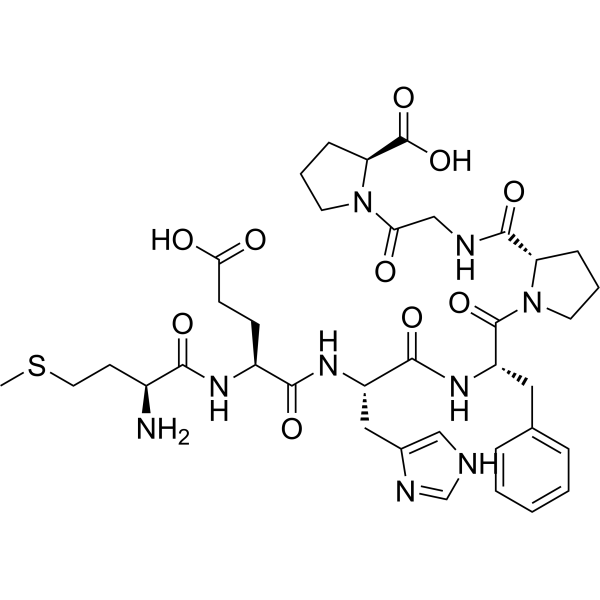
Semax is a synthetic heptapeptide (a peptide consisting of seven amino acids: Met-Glu-His-Phe-Pro-Gly-Pro). It was developed in the 1980s by the Institute of Molecular Genetics at the Russian Academy of Sciences.
Structurally, it is an analog of a fragment of ACTH (Adrenocorticotropic hormone). However, unlike ACTH, Semax has been modified so that it does not exhibit hormonal activity. Instead, it crosses the blood-brain barrier (BBB) to act almost exclusively on the central nervous system. In Russia and Ukraine, it is an approved medication used to treat strokes, cognitive decline, optic nerve diseases, and even peptic ulcers.
react_logo.pngAction required to download
⚙️ Mechanism of Action: How Does it Work?
Semax does not work like a traditional stimulant (e.g., amphetamines or caffeine). Its mechanisms are deeply tied to neuroplasticity and neuromodulation:
- Upregulation of BDNF and NGF: This is Semax’s claim to fame. It rapidly increases the expression of Brain-Derived Neurotrophic Factor (BDNF) and Nerve Growth Factor (NGF) in the hippocampus and forebrain. These proteins are the "fertilizer" of the brain, responsible for the growth, survival, and differentiation of new neurons and synapses.
- Dopaminergic & Serotonergic Modulation: Semax enhances the activity of dopamine and serotonin receptors, leading to an increase in focus, motivation, and mood without depleting neurotransmitter stores.
- Enkephalin Protection: Semax inhibits the enzymes that break down enkephalins (the body's natural painkillers and stress-reducers), which contributes to its anti-anxiety (anxiolytic) properties.
🧠 Potential Benefits
Based on clinical use and anecdotal reports within the peptide community, the primary benefits include:
- Enhanced Cognition & Focus: Users report a "clear-headed" focus, improved working memory, and faster learning acquisition.
- ADHD Management: Because of its gentle dopaminergic action, many researchers study Semax as an alternative to harsh stimulant medications.
- Neuroprotection & Stroke Recovery: It protects neurons from hypoxic damage (lack of oxygen) and heavy metal toxicity.
- Mood Elevation: Reduction in mental fatigue and a noticeable decrease in anxiety in high-stress situations.
🧪 The Three Variants of Semax
If you are looking at biotech vendors, you will likely see three versions of Semax. Here is the difference:
- Standard Semax: The original Russian formula. Highly effective but has a relatively short half-life and is susceptible to enzymatic breakdown.
- N-Acetyl Semax (NA-Semax): The addition of an acetyl group improves the peptide's stability and dramatically increases its ability to cross the blood-brain barrier.
- N-Acetyl Semax Amidate (NASA): The addition of an amide group at the C-terminus further protects the peptide from enzymatic degradation. This variant has the longest half-life, the best BBB penetration, and is considered the "gold standard" for cognitive enhancement by biohackers.
💉 Administration and Dosage
(Note: Dosages vary based on the variant used and individual research goals).
- Route: Because peptides are destroyed in the GI tract, Semax is primarily administered via intranasal spray (the most common and highly effective method for brain delivery) or Subcutaneous (SubQ) injection.
- Dosage: For intranasal use, typical research doses range from 200mcg to 1,000mcg (1mg) per day. SubQ doses are generally lower due to higher bioavailability.
- Cycling: Because it upregulates BDNF, it is usually cycled (e.g., 4 weeks on, 1-2 weeks off) to prevent receptor downregulation.
⚠️ Side Effects & Considerations
Semax is generally considered very safe and non-toxic, with a massive therapeutic window. However, some reported side effects include:
- Hair loss (Anecdotal): High levels of BDNF can accelerate the hair growth cycle, which may cause shedding in individuals predisposed to male pattern baldness.
- Irritability/Overstimulation: Usually a result of dosing too high.
- Lethargy: Sometimes experienced when the peptide wears off or if the dose is too high (brain fatigue from over-firing).
📚 Top Scientific Studies on Semax
For those who want to dig into the actual literature, here are some of the most pivotal studies demonstrating Semax's efficacy:
1. Semax and BDNF / NGF Expression
This foundational study demonstrates how Semax rapidly upregulates BDNF and NGF in the brain, proving its neurogenic properties.
- Study: Semax, an analog of ACTH(4-10) with cognitive-enhancing effects, regulates BDNF and trkB expression in the rat hippocampus.
- Link: PubMed: 16996699
2. Semax in Stroke and Ischemic Recovery
A clinical look at how Semax is used to treat acute ischemic stroke, showcasing its neuroprotective capabilities and ability to halt neuronal death.
- Study: Efficacy and safety of Semax in acute ischemic stroke: a randomized controlled trial.
- Link: PubMed: 15798585 (Note: Russian clinical literature)
3. Semax for ADHD and Cognitive Improvement
Research highlighting the effects of Semax on attention, memory, and its potential as a treatment for ADHD due to its neuromodulatory effects.
- Study: The use of Semax in the treatment of patients with attention deficit hyperactivity disorder.
- Link: PubMed: 15338690
4. Semax and Dopamine/Serotonin Modulation
This study explores how Semax interacts with the brain's monoamine systems, explaining why users feel enhanced motivation and mood.
- Study: Effects of Semax on the monoaminergic systems of the brain.
- Link: PubMed: 18630713
🏁 Conclusion
Semax remains one of the most fascinating peptides in the biotech world. Unlike traditional nootropics that simply push dopamine or acetylcholine, Semax fundamentally alters the brain's environment by promoting actual structural growth and repair via BDNF. Whether for cognitive enhancement or neuroprotection, it is a highly validated peptide worth researching.
Disclaimer: This post is for educational and informational purposes only. Semax is not FDA-approved in the United States. Always conduct your own research and consult with a medical professional before introducing peptides into your protocol.
Attachments
secret_document.pdfAction required to download